


Navigating HRCA Exterior Approvals
Updating the exterior of a 1990s home is an excellent way to force appreciation, but it requires strict compliance. Learn how to secure your remodel approvals quickly and protect your investment.
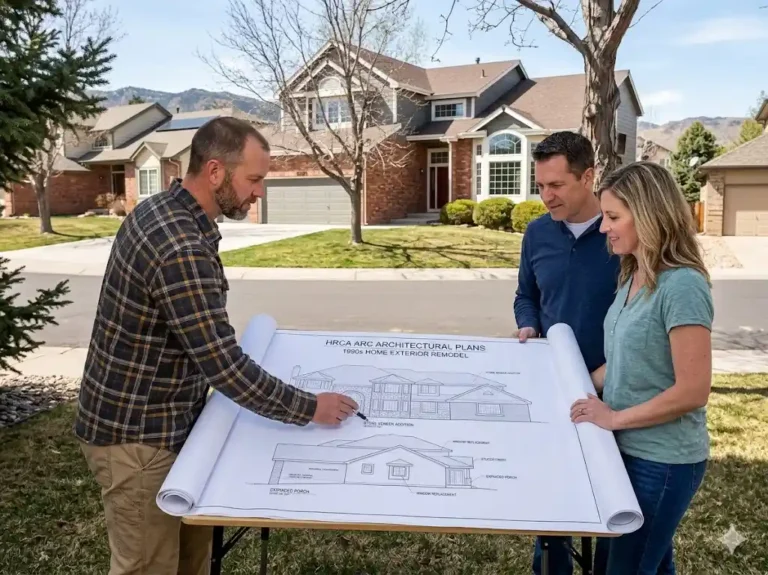
Understanding the ARC Timeline & Guidelines
The Highlands Ranch Community Association (HRCA) was established to maintain a cohesive, high-quality aesthetic throughout the community. Therefore, almost any exterior change on an older property requires formal approval from the Architectural Review Committee (ARC).
The Timeline Factor: Many buyers close on a fixer-upper expecting to start exterior renovations on day one. In reality, you must submit a detailed application requiring precise property lines, material samples, and scaled drawings. The ARC typically takes 30 to 45 days to process these requests. Having a builder prepare these documents correctly the first time prevents frustrating rejections and delays.
Paint and Windows: Exterior painting is the most common update. You cannot simply choose any color; the HRCA mandates specific color palettes (often matched via Sherwin Williams) that correspond to your specific neighborhood sub-association. Similarly, upgrading original 1990s aluminum windows is a brilliant investment, but the ARC heavily regulates window grid patterns and frame colors to maintain architectural continuity.
The Engineer's Warning: Unapproved Modifications & Roof Loads
Severe Penalties: Completing exterior work without prior ARC approval is a costly mistake. The HRCA has the legal authority to levy heavy fines and force you to tear down unapproved modifications at your own expense. Never bypass the approval process.
Roofing Dead Loads: Replacing a dated concrete tile roof requires approved materials that match the neighborhood aesthetic. However, as an engineer, my primary concern is structural. If you switch roofing materials, the dead-load on your trusses changes. We must evaluate the structural load capacity of your 1990s framing to ensure it can safely support the new roofing system.
Fencing and Landscaping Modifications
Replacing deteriorating cedar fencing is incredibly common in legacy neighborhoods like Northridge and Eastridge. The HRCA has strict guidelines regarding fence height, setbacks, and maintenance. Most notably, all standard wood fencing must be maintained using the approved "Highlands Ranch Brown" solid stain.
Additionally, removing mature trees or altering drainage paths during landscaping requires careful planning and, often, ARC approval. Coordinating these exterior updates properly ensures your property appreciates without violating community covenants.