

Selling an Inherited, Probate or Trust Home in Highlands Ranch
Settling a parent’s home in Highlands Ranch or Douglas County asks you to balance family memories, legal paperwork, and smart construction math at the exact same time. Whether the property sits in a revocable living trust, transfers through a Colorado beneficiary deed, or requires informal probate in Castle Rock, our goal is to protect your stepped-up tax basis and help your family net the highest return without wasting months on the wrong repairs.
Read Full Video Transcript (0:55) +
“Inherited a home in Highlands Ranch or Douglas County? Before calling a cash flipper or remodeling, check your deed. Federal tax rules step up your cost basis to date-of-death value, while Colorado Beneficiary Deeds require a four-month wait. In our ninety-day report, eighties and nineties homes hit a seven hundred two thousand dollar median in twenty-two days. Off-market cash wholesalers discount offers up to twenty-seven percent—leaving over one hundred ten thousand dollars behind. As a builder and engineer, skip eighty-five-thousand-dollar kitchen remodels; a simple paint and carpet refresh nets far more. Price right for week one: first-week sales gained eight thousand dollars, while stale listings lost one hundred thousand. Read my full inherited, probate, and trust home guide right now at Living in Highlands Ranch dot com.”
How Probate, Trust, and Beneficiary Deeds Work in Douglas County
When I sit down at the kitchen table with adult children who have just lost a parent, their first question is almost always about when they are legally allowed to sign a listing agreement. Many original buyers who moved into Northridge or Eastridge in the 1980s and 1990s kept their homes for thirty or forty years. Before you haul away a single box or hire a painter, we first look at how the deed is currently vested with the Douglas County Clerk and Recorder.
While I always encourage families to work alongside a licensed Colorado estate attorney and a qualified CPA for legal and tax filings, understanding the three main Colorado transfer tracks removes a huge amount of stress right from day one. In Colorado, a Small Estate Affidavit cannot transfer real estate, so every inherited home in Douglas County follows one of three title paths through the 23rd Judicial District at the Douglas County Combined Court in Castle Rock.
- Revocable Living Trust (Trustee’s Deed): If your parents titled the house into a living trust, the sale skips probate court completely. The successor trustee provides the trust document, records a Statement of Authority alongside the death certificate, and signs a Trustee’s Deed at closing.
- Informal or Formal Probate (Personal Representative’s Deed): When a home is titled solely in a deceased parent’s name, the estate opens probate at the Douglas County Combined Court. Once the court issues Letters Testamentary (with a will) or Letters of Administration (without a will), the Personal Representative has legal authority to list the property and sign a Personal Representative’s Deed at closing without waiting for a judge to approve the contract in unsupervised administration.
- Colorado Beneficiary Deed (The 4-Month Title Window): A recorded Beneficiary Deed transfers ownership outside of probate once the death certificate is recorded. However, Colorado statute gives estate creditors and Medicaid recovery four months from the date of death to file a claim, so nearly all title insurance companies require waiting four months after the date of death before insuring a closing.
Knowing that four-month Beneficiary Deed rule early is a game changer for families. Instead of rushing into an underpriced contract that stalls in title underwriting, we use months one through three to sort family heirlooms, complete an estate sale, and handle minor exterior upkeep so the home hits the market right as the four-month window clears.
| Estate Cohort or Title Path | Key Legal or 90-Day MLS Benchmark | 3-Benchmark $/SqFt & Concession Reality | Builder & Negotiator Takeaway |
|---|---|---|---|
| 1981–1999 Detached Estate Cohort (Northridge, Eastridge, Westridge) | 166 closed sales (73.8% absorption, 26.2% unsold) at $702,500 median in 22 median True CDOM. | $355 Above-Grade / $286 Finished / $250 Total Structure SqFt; 70.5% paid concessions ($11,097 avg). | Seven in ten buyers of 1980s and 1990s homes negotiate an inspection or rate credit; budget an $11K reserve rather than over-remodeling. |
| Northridge Original-Owner Estates (Detached SFR) | 38 closed sales (65.5% absorption, 34.5% unsold) at $665,000 median in 32 median True CDOM. | $354 Above-Grade / $292 Finished / $244 Total Structure SqFt; 78.9% paid concessions ($13,486 avg). | Buyers scrutinize original roofs, polybutylene plumbing, electrical panels, and expansive soil drainage along older mature lots. |
| Eastridge & Gleneagles Village Patio Estates | Eastridge SFR: 53 closed at $715,000 median (22d CDOM). Gleneagles Village SFR: 4 closed at $769,950 median (75% cash). | Eastridge: $332 Above-Grade / $279 Finished / $237 Total. Gleneagles: $416 Above-Grade / $316 Finished / $239 Total. | Single-story ranch and patio layouts attract 72% to 75% cash downsizing buyers who pay a steep premium for main-floor living. |
| 2000–Present Luxury & Lock-and-Leave (Backcountry, Tresana, Newer) | 2000–2014 SFR: 62 closed at $720,000 median. Backcountry: $1,360,000 median (76.9% cash). 2015+ Newer: $1,224,975 median. | Backcountry: $578 Above-Grade / $372 Finished / $313 Total. Tresana Attached: $334 Above-Grade / $321 Finished / $293 Total. | High-end trust sales move quickly when staged cleanly and priced accurately inside the first 7 days on market. |
| Informal Probate vs. Trust vs. Beneficiary Deed | Douglas County Combined Court (23rd Judicial District, Castle Rock) issues Letters Testamentary or Administration. | Trust: immediate closing via Statement of Authority (C.R.S. 38-30-172). Beneficiary Deed: 4-month creditor window (C.R.S. 15-15-407). | Never sign a listing or purchase contract until Letters are issued or the successor trustee’s authority is verified by title. |
Protecting Your Step-Up in Cost Basis and Avoiding the 7-Day Pricing Cliff
One of the most valuable financial protections available to families inheriting a home is the federal step-up in cost basis under Internal Revenue Code Section 1014. If your parents bought their home in Eastridge or Gleneagles Village thirty years ago for a fraction of today’s market value, the tax basis generally resets to the property’s fair market value on the date of death. In addition, Colorado imposes zero state-level estate or inheritance tax.
When multiple siblings or trust beneficiaries live in different states, emotions and guesswork can quickly cause tension around what the house is really worth. To protect the Personal Representative or Successor Trustee, I always prepare a documented Highlands Ranch home valuation using our three Colorado square-footage benchmarks before any repairs begin. Separating above-grade living space, finished basement area, and total structure square footage gives your CPA and every heir an objective, verifiable baseline.
Accurate initial pricing is especially critical for estates because of how fast the local market punishes aspirational list prices. Across our 90-day REcolorado MLS data, detached homes that went under contract in their first seven days closed above their original asking price on average, while listings that lingered past 45 days suffered an average total net hit of roughly $100,000 once price cuts and seller concessions were combined.
Wholesaler Lowballs vs. Direct Builder Cash Offer vs. Open-Market Listing
Within days of a probate filing in Castle Rock, executors routinely receive stacks of mail-merge postcards from middleman wholesalers pitching fast cash buyouts. Unlike true local buyers, assignment wholesalers lock up estates at 20% to 28% below retail value so they can flip the contract for a middleman fee.
Estates can also lose hard-earned equity on the opposite extreme by over-improving a dated property before listing. Spending $85,000 over four months on a full kitchen and bath gut-remodel rarely pays back dollar for dollar, since incoming buyers prefer choosing their own finishes. While I never replace your licensed third-party home or structural inspector, I walk the property with you from a builder and engineer perspective to share general construction and remodeling knowledge.
To give Personal Representatives and out-of-state heirs total clarity, I prepare a private side-by-side two-option estate net sheet during our walkthrough. One side maps out your open-market listing net—either clean as-is or lightly refreshed—where I represent the estate as your broker. The other side places my direct as-is cash offer right beside it using my own builder funds, letting heirs leave unwanted contents behind and close on your probate timeline. On any direct cash purchase, I provide upfront written Colorado disclosure that I am buying as a principal for profit rather than as your listing agent. Your family, CPA, and estate attorney can compare every net-sheet number openly with zero pressure.
| Disposition Strategy | Upfront Estate Prep & Timeline | Expected Price & Structure | Estimated Estate Net Impact |
|---|---|---|---|
| Mail-Merge Cash Wholesaler / Middleman (Avoid) | $0 prep; fast assignment contract, often followed by late inspection price cuts. | ~$515,000 to $550,000 gross offer (~22% to 27% below retail value). | Leaves ~$110,000 to $145,000 of family equity behind to pay middleman margins. |
| Option 2: Direct Principal Builder Cash Offer (Saber’s Funds) | $0 prep, zero showings, leave unwanted contents behind; close on your probate timeline. | Direct as-is builder purchase using Saber’s own funds (zero wholesaler or referral fees). | True certainty and speed with upfront written Colorado principal-buyer disclosure. |
| Option 1A: Clean Open-Market As-Is Listing | ~$2,500 to $4,500 for estate haul-away, deep clean, and yard trim; 1 to 2 weeks prep. | ~$655,000 to $675,000 sale price with a typical ~$11,000 to $13,500 buyer credit. | Captures full open-market competition from retail buyers with minimal upfront cash. |
| Option 1B: Targeted 14-Day Cosmetic & Safety Refresh | ~$10,000 to $18,000 for neutral paint, carpet, modern lighting, and minor safety fixes; 2 to 3 weeks prep. | ~$700,000 to $720,000 sale price; qualifies cleanly for conventional, FHA, and VA buyers. | Highest net return to the estate, often adding ~$25,000 to $35,000 above prep cost. |
| Full Gut Kitchen & Bath Remodel (Avoid) | $65,000 to $110,000+ plus 3 to 5 months of extra property taxes, utilities, and vacant insurance. | ~$735,000 to $755,000 sale price after months of contractor management and permit waits. | Poor estate return; holding costs and remodel bills routinely erase the price bump. |
What to Check Across All Three Build Eras When Managing From Out of State
Even when an estate sells a property in as-is condition, buyers with conventional, VA, or FHA financing still need the house to pass lender safety and homeowners insurance checks. When reviewing older 1980s and 1990s Highlands Ranch homes, we help families spot the exact mechanical and exterior items that could otherwise derail a buyer’s loan two weeks before closing:
- 1980s & 1990s Original-Owner Homes (Northridge, Eastridge, Westridge, Gleneagles Village): We look closely for gray polybutylene supply piping, older electrical panels, original wood-slat decks with ledger or post rot, negative soil grading near the foundation, and hail-aged roofs that could prevent a buyer from binding homeowners insurance.
- 2000s & 2010s Luxury & Patio Enclaves (Backcountry, Tresana, Firelight): In custom and semi-custom estates in Backcountry or lock-and-leave residences in Tresana, buyers focus on multi-zone furnace and humidifier servicing, failed thermal window seals, and stone or composite deck waterproofing.
- 2015–Present Newer Luxury Estates: For newer construction estates, preparation centers on transferring builder structural warranties, verifying solar panel ownership documents, and crisp presentation for cash buyers.
- HRCA Exterior Compliance & Status Letter Readiness: During closing, title orders an official HRCA Status Letter and estoppel package. Addressing peeling fascia trim paint, leaning cedar fence sections, or unapproved yard structures early prevents covenant compliance holdbacks at the closing table.
- Vacant-Home Winterization & Out-of-State Coordination: If the home is unoccupied while probate clears, keep the thermostat set between 58 and 62 degrees, disconnect exterior garden hoses, register the Centennial Water smart meter on EyeOnWater to catch silent toilet leaks, and notify the homeowner’s insurance carrier if the house sits vacant past 30 days.
Finally, remember that Colorado’s Seller’s Property Disclosure is strictly limited to your current actual knowledge. If you never lived in the house as an adult, you should never guess the age of a furnace or roof—you simply disclose any actual material facts you know about and let the buyer rely on their own independent licensed inspectors. And as we review your estate’s net sheet together, keep in mind that Colorado real estate brokerage fees are never set by law, are 100% individually negotiable outside the MLS, and REcolorado MLS strictly prohibits displaying or offering broker compensation in any MLS field.
Real-World Inherited Home Turnaround: Opening a Boxed-In Kitchen & Stairwell
When an inherited property has a closed-off floor plan that keeps retail buyers from making an offer, targeted structural sightline updates often succeed where months of as-is listing failed:
Rescuing an Unsold Inherited Home by Opening the Kitchen & Stairwell
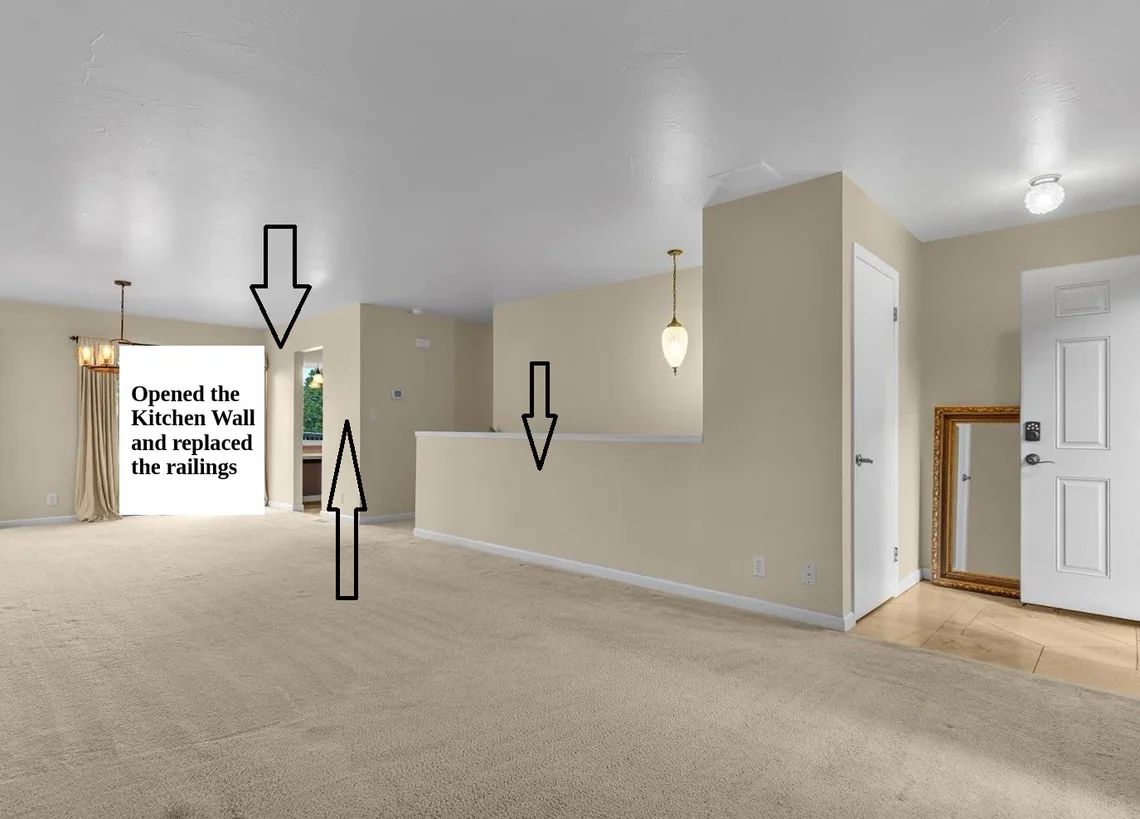
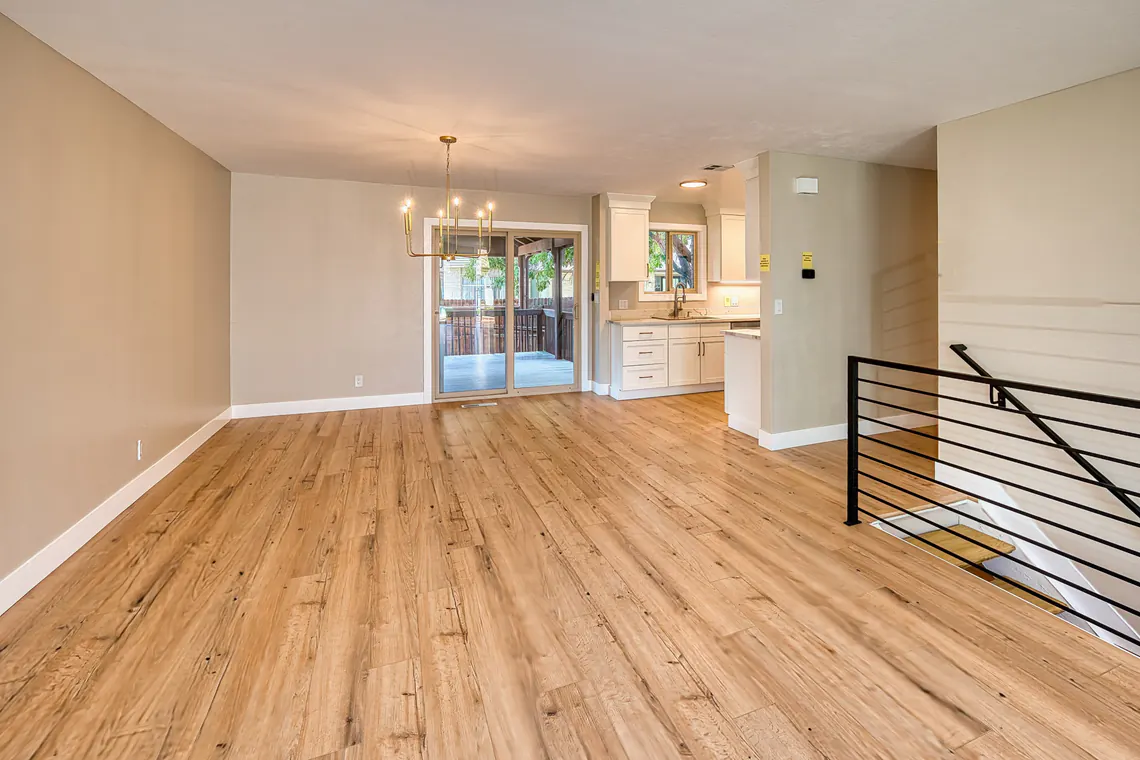
My sellers inherited a family home and first tried selling it as-is with another agent, where it sat on the market for months. Buyers kept turning around at the boxed-in kitchen doorway and heavy drywall stair half-walls.
We mapped out a focused pre-sale update plan together instead of chasing deeper price cuts. We removed the left kitchen wall completely, pushed the side wall back about three feet, and replaced the solid basement stair half-walls with sleek black metal railings.
Frequently Asked Questions
Can a Small Estate Affidavit transfer title to a house in Douglas County, Colorado?
Why do Colorado title companies wait four months to close on a Beneficiary Deed?
How does a Seller’s Property Disclosure work when adult children never lived in the inherited home?

Highlands Ranch Realtor, residential builder, home rehab expert, and engineer who shares general construction knowledge, layout and remodeling ideas for basements, decks, landscaping, and kitchens, and helps families know what questions to ask independent licensed inspectors.
Managing an inherited, probate, or trust home sale in Highlands Ranch or Douglas County?
Read Saber’s Realtor, Builder & Engineer Bio or reach out directly for a private Date-of-Death valuation and as-is vs. refresh walkthrough.